A Practical Guide for International Students in Newcastle
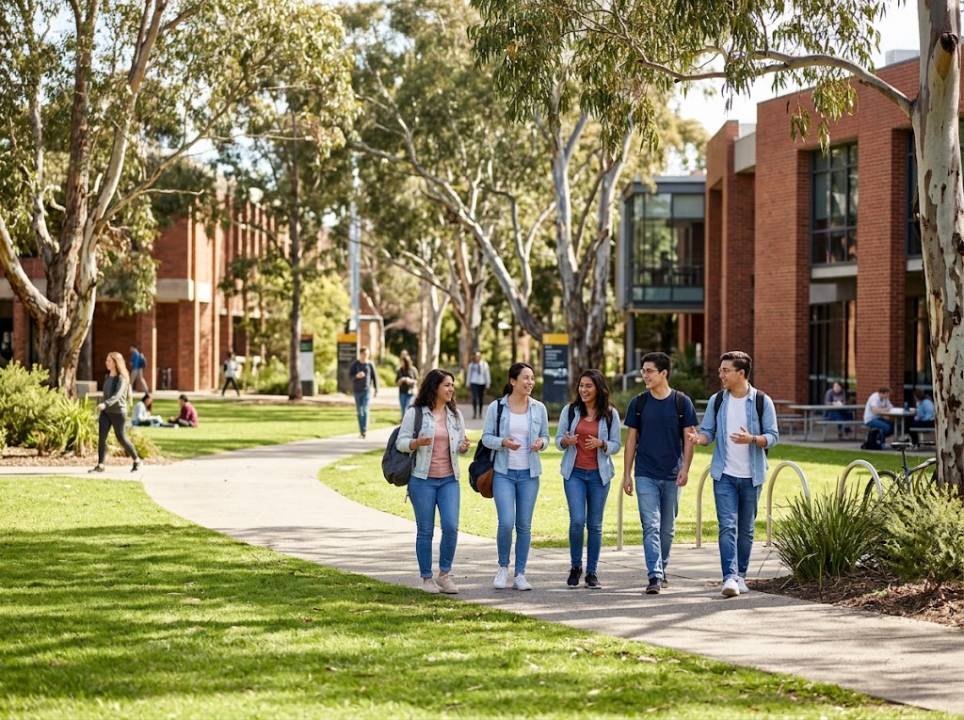
Newcastle sits about two hours north of Sydney, on a stretch of coast where surf beaches meet a working harbour. It is Australia's seventh largest city, yet it still feels relaxed and walkable. For thousands of international students every year, it is also home to one of the country's better known universities.
The University of Newcastle welcomes students from more than a hundred countries across its Callaghan campus, its city campus and sites in Sydney and Singapore. Getting there smoothly depends far more on preparation than on luck.
Why students choose Newcastle
The university is known for engineering, medicine, nursing, education and environmental science, and it regularly appears in global rankings. Its medical programme, run jointly with the University of New England, has a strong focus on rural and Indigenous health. Many students also mention the lifestyle: lower living costs than Sydney or Melbourne, beaches within reach of campus and a friendly local community.
Applications start with documents
Every application relies on a stack of paperwork. Academic transcripts, degree certificates, English test results, passport copies and sometimes references or portfolios all need to be submitted in English. If your originals are in another language, the university will ask for official translations.
This is where many applications slow down. A missing stamp, an inconsistent spelling of your name or an incomplete translation can add weeks to the process.
Getting these documents right the first time saves months of delays. Professional document translation services handle academic transcripts, degree certificates and English test results with the precision admissions offices expect. They know how grading scales, degree titles and institutional names should appear so that nothing gets lost in conversion. Students who arrange certified translations early usually clear the paperwork stage without a hitch.
Students from Germany, Austria and Switzerland
German academic documents follow a very specific format. The Abiturzeugnis, Bachelor transcripts and Diploma Supplements contain grading scales and course titles that admissions officers need to understand correctly. Using certified german translation services ensures that your grades and qualifications are presented accurately, which matters when your results are being compared with local students.
Students from France and francophone countries
Applicants from France, Belgium, Morocco, Senegal or Quebec often hold a baccalauréat, licence or master's degree that does not map neatly onto Australian categories. Certified French translation services help make sure terms like "mention très bien" or the French twenty-point grading scale are explained clearly rather than left to interpretation.
Students from Eastern Europe and Central Asia
Many applicants from Kazakhstan, Uzbekistan, Armenia or Russia hold documents issued in Russian. A careful translation russian to english of diplomas and supplements, including the list of subjects and hours, gives admissions staff the detail they need to assess credit and entry level.
Visas and health cover
Most international students need a Student visa (subclass 500). You will need a Confirmation of Enrolment from the university, proof of financial capacity and Overseas Student Health Cover for the full length of your stay. The Department of Home Affairs also checks that you meet the genuine student requirement, so keep your study plans and motivation clear and consistent across your application.
Tip: keep digital copies of every document and translation in one folder. You will need them again for bank accounts, tax file numbers, rental applications and part-time jobs.
Finding a place to live
The university offers on-campus accommodation at Callaghan, which is popular with first-year students because it removes the stress of finding a flat from overseas. Others prefer shared houses in suburbs such as Jesmond, Waratah, Mayfield or Cooks Hill. Rent is lower than in Sydney but has risen in recent years, so it pays to start looking early.
Getting around
Buses connect the Callaghan campus with the city centre and surrounding suburbs, and the light rail runs through the city. Many students cycle, and the coastal walk from Merewether to Nobbys is one of the best ways to discover the city on a weekend.
Campus life and student support
Clubs and societies cover everything from surfing and rock climbing to cultural associations for students from Asia, Africa, Europe and Latin America. Joining one in the first weeks is the fastest way to make friends. The university also runs orientation programmes, academic writing support, career services and counselling.
Gear up before you arrive
Many new students like to arrive with something that makes them feel part of the community. The university's official online shop sells hoodies, caps, notebooks and graduation gifts, which also make good presents for family back home. Ordering a few basics before you fly can make the first cold morning on campus a little friendlier.
Working while you study
Student visa holders can work a limited number of hours per fortnight during semesters and unlimited hours during official breaks. Typical jobs include hospitality, retail, tutoring and research assistant roles. To start working you will need a tax file number and an Australian bank account, both of which require the same identity documents you used for your visa.
A checklist for the months before departure
- Request official transcripts and certificates from your previous institutions.
- Arrange certified translations of all non-English documents.
- Book your English test early if you need one.
- Apply for your visa as soon as you receive your Confirmation of Enrolment.
- Arrange accommodation and airport pickup.
- Prepare a budget for the first three months.
Settling in
The first weeks can feel overwhelming, with new accents, new systems and a very different academic culture. Australian lecturers often expect independent research and active participation in tutorials. Give yourself time, ask questions and use the support services. Most students say that by the end of their first semester, Newcastle feels less like a destination and more like home.